Retail is no longer competing on price alone. It’s competing on VR,MR, XR Experiences.
The retail landscape of 2026 isn’t just “digital first” it’s immersive by default. We have officially moved past the era of virtual reality being dismissed as a clunky, expensive gimmick reserved for gaming enthusiasts and experimental marketing campaigns. Today VR retail is a critical conversion engine, a champion of sustainability, and the ultimate cure for the e-commerce sector’s massive, margin-crushing product return headache.
If your brand is still relying on static 2D product grids, endless scrolling and “hope-it-fits” marketing. You’re essentially running a storefront in black and white while your competitors have upgraded to full, vibrant Technicolor. At Atlyx, we believe in bold, bright orange transformations that wake up stagnant industries. It’s time to stop blending in and start building worlds.
In this comprehensive guide we are tearing down the misconceptions surrounding immersive ecommerce. We will explore exactly how virtual showrooms and try-on tech are rewriting the retail playbook, the technical roadmap to integration and the exact metrics you need to prove ROI to your stakeholders.
Evolution of VR in Retail: From Gimmick to Necessity
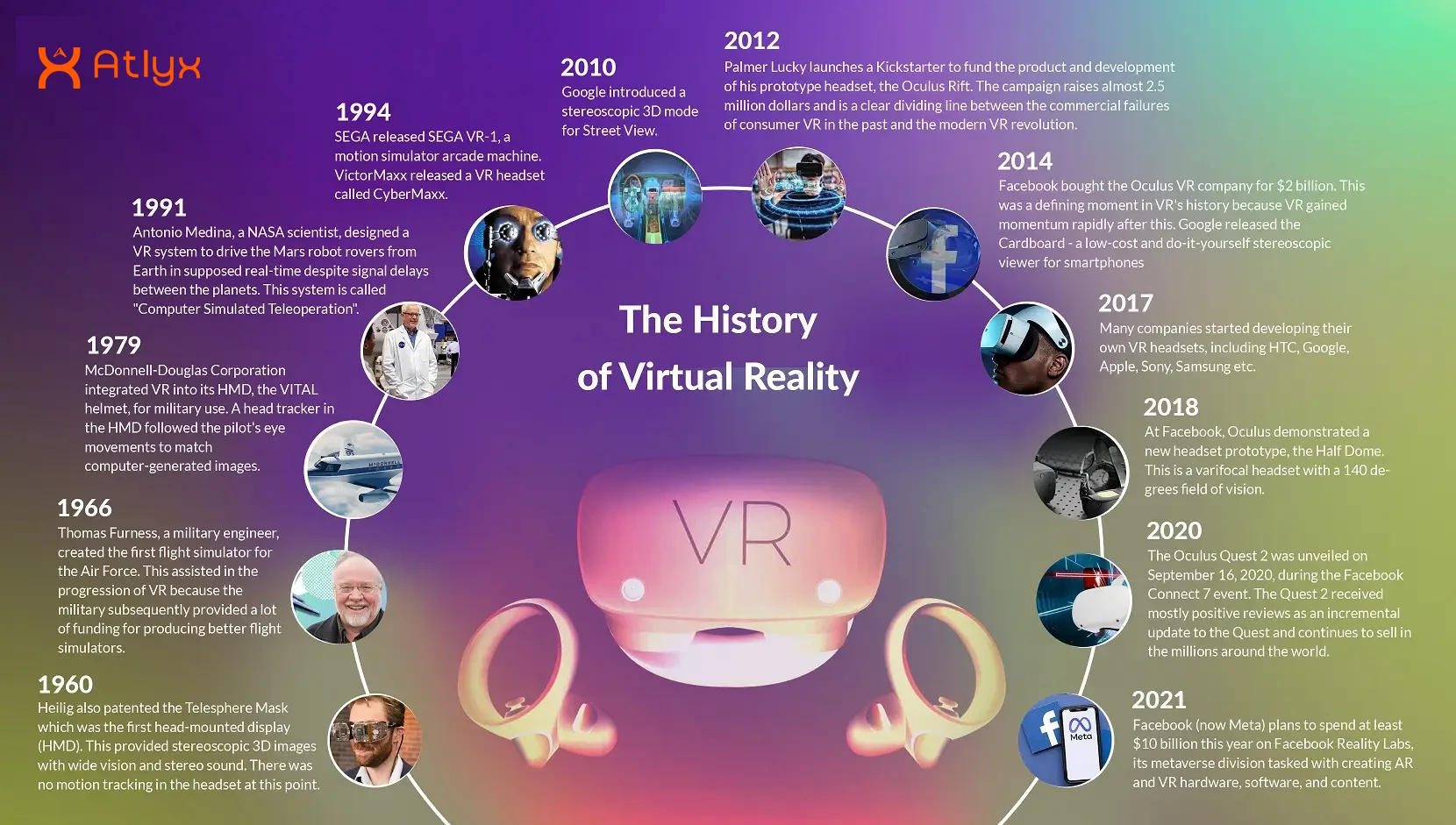
To understand where immersive shopping is going we have to look at how rapidly the technology has matured. Remember the landscape in 2021 and 2022? Early attempts at VR retail involved pixelated avatars wandering through empty, low resolution “metaverse” malls. It was a novelty, but it lacked utility. It created friction rather than removing it.
Why 2026 is the True Tipping Point
The narrative has completely shifted. The global VR and AR retail market is experiencing compounding, explosive growth. But this isn’t simply because headset hardware like the Apple Vision Pro or the Meta Quest 3 has become lighter and more powerful. The real catalyst is a fundamental shift in consumer psychology.
Gen Z and Gen Alpha shoppers no longer draw a hard line between “online” and “offline” experiences. They expect a “Phygital” (Physical + Digital) bridge. They want the convenience of ecommerce combined with the tactile confidence of physical retail. Immersive shopping bridges this gap by offering spatial context that a flat web page simply cannot provide.
Overcoming the Hardware Barrier: The Rise of WebVR
The greatest leap forward for VR retail hasn’t been in headsets. It has been in the browser. In 2026 friction is the ultimate enemy of conversion. Modern consumers suffer from intense “app fatigue.” They absolutely will not download a 300MB proprietary application just to see if a mid-century modern sofa fits in their living room or to try on a pair of sunglasses.
Enter Web based VR (WebVR and WebXR). This allows users to launch high fidelity, interactive 3D environments directly from their standard mobile or desktop browsers. No App downloads, No specialized hardware required.
- Democratized Access: Anyone with a smartphone can instantly step into your brand’s universe.
- The ROI Impact: Retailers utilizing Web-based VR vs app-based VR report up to a 300% increase in user engagement and session duration simply by removing the download barrier.
Virtual Showrooms: Designing the Infinite Storefront
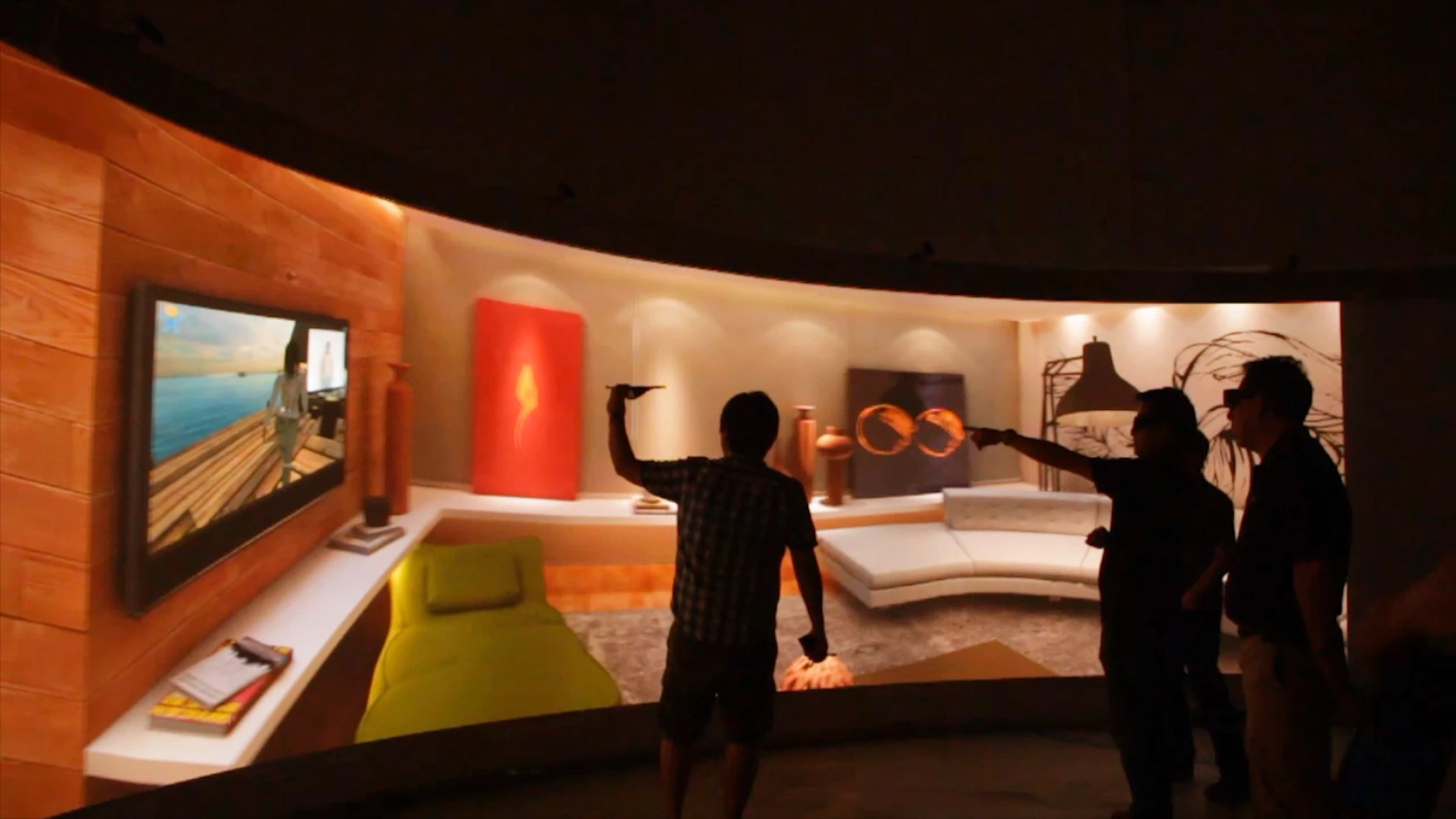
A physical flagship store in Mumbai, Manhattan, London or Tokyo costs millions in real estate, staffing, insurance and maintenance. A virtual showroom by contrast costs a fraction of that overhead while boasting a footprint that spans the entire globe simultaneously.
Infinite Floor Space and Zero Inventory Risk
- A/B Test Visual Merchandising: Instantly swap out store layouts, lighting and product placements to see which combinations drive the most interaction.
- Pre-Sell and Validate: Test highly experimental, bold designs virtually. Gauge customer interest and secure pre-orders before committing to expensive manufacturing runs, effectively eliminating dead stock.
- Hyper-Personalized B2B Wholesale: For B2B brands, a virtual showroom means your sales team can walk a buyer in Dubai through your entire upcoming seasonal collection in real-time, right from your headquarters.
3D Asset Management: The Era of Digital Twins
The foundation of any successful virtual showroom is the Digital Twin a mathematically precise, high-fidelity 3D replica of your physical product. In 2026, 3D scanning and photogrammetry have advanced to the point where digital twins are virtually indistinguishable from the real thing.High-fidelity rendering engines ensure that the exact texture of a velvet chair, the precise grain of a leather handbag, or the metallic sheen of a watch face reacts authentically to virtual lighting. Building a centralized library of these 3D assets is the most crucial investment a modern retailer can make. Once created, these assets can be deployed across virtual showrooms, augmented reality (AR) filters on social media, and traditional e-commerce product pages.
Virtual Try-Ons (VTO): Solving the $600 Billion Return Problem

If there is one metric that keeps ecommerce executives awake at night, it is the return rate. The National Retail Federation consistently highlights</a > product returns particularly in apparel and footwear as a multi-billion dollar hemorrhage on profit margins and a catastrophic burden on the environment due to reverse logistics.
- Virtual try-on software is no longer just a fun feature; it is the surgical tool required to fix this broken system.
Precision Fit: Where AI Meets Spatial Computing
Yesterday’s virtual tryon was essentially an Instagram filter. A flat 2D sticker awkwardly hovering over a user’s face or body. Today’s VTO is powered by deep learning, computer vision and cloth simulation algorithms.
When a customer uses VTO for clothing in 2026 the software maps the user’s skeletal structure and exact body measurements. The “digital fabric” then drapes, stretches and wrinkles exactly as the physical garment would. It accounts for the physical properties of silk versus heavy denim.
- VR Beauty and Cosmetics: Brands in this space have fully integrated AR mirrors. Consumers can perfectly match foundation shades to their specific skin tone under different lighting conditions (warm indoor light vs. harsh sunlight), increasing purchase confidence exponentially.
- VR Eyewear and Jewelry: AI-powered facial mapping and hand tracking allow for millimeter-perfect scaling. Customers can see exactly where a pair of glasses will sit on the bridge of their nose.
The Psychology of Ownership
There is a powerful psychological driver at play here known as the “Endowment Effect.” When a customer sees themselves actively “wearing” an item or placing a piece of virtual furniture in their actual living room, their brain begins to process the item as something they already own. This emotional connection dramatically shortens the consideration phase and leads to a massive spike in conversion rates. Better yet, because the customer knows exactly how the item will look and fit, brands utilizing high-quality VTO are seeing up to a 30% reduction in return rates.
Technical Integration: How to Launch Your VR Strategy
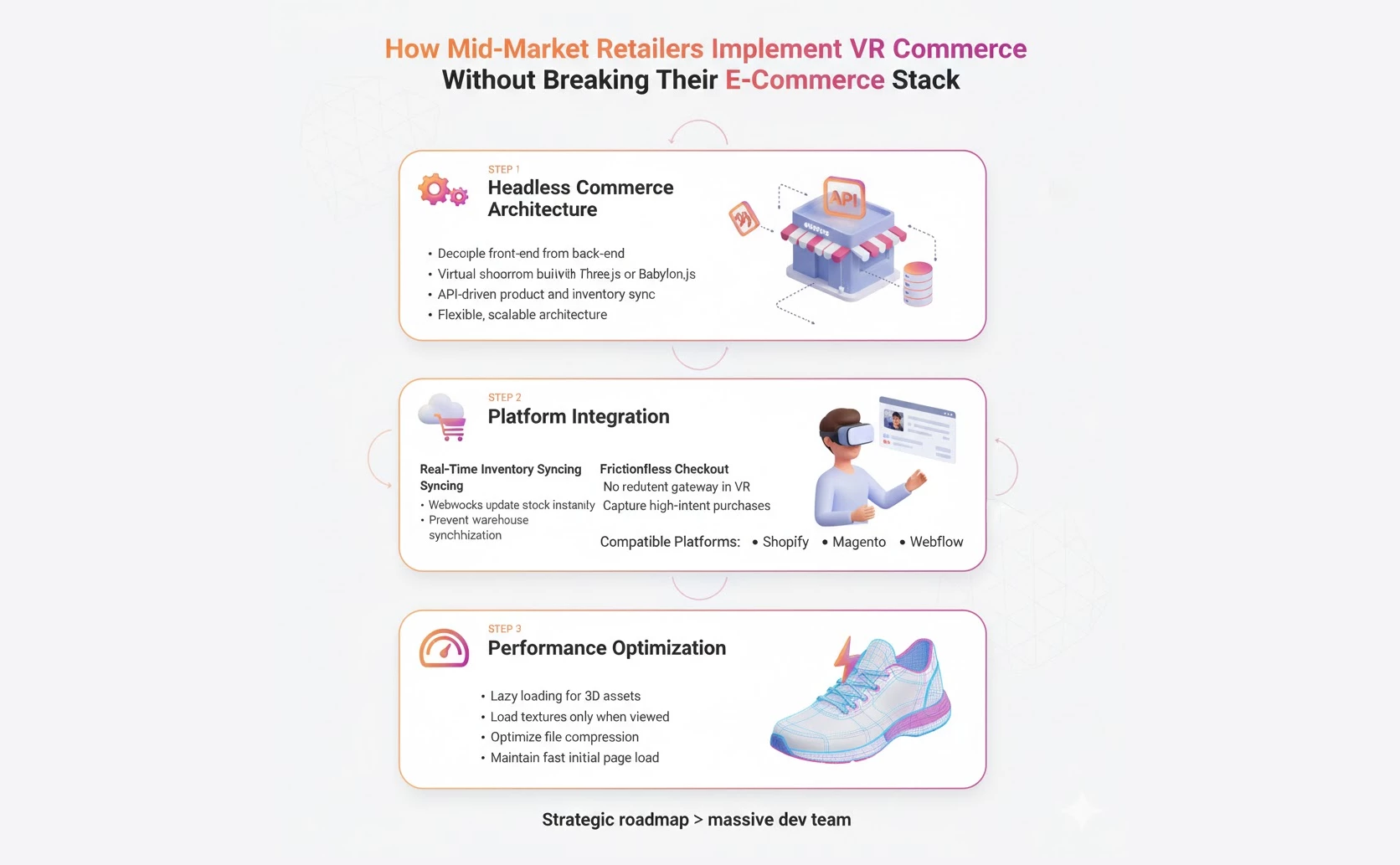
The most common roadblock for mid-market retailers isn’t budget; it’s a lack of technical clarity. You do not need an army of Silicon Valley developers to implement VR retail, but you do need a strategic roadmap. Here is how you integrate immersive tech into your existing e-commerce stack without breaking your site.
Step 1: The Headless Commerce Approach
To make VR seamless, you must decouple your front-end customer experience from your back-end inventory management. A “headless” architecture allows your virtual showroom (built on frameworks like Three.js or Babylon.js) to pull data via API directly from your e-commerce platform.
Step 2: Integrating with Shopify, Magento and Webflow
Leading platforms have heavily invested in 3D and AR APIs.
- Real-Time Inventory Syncing: This is non-negotiable. If a user is walking through your virtual showroom and a physical shopper buys the last medium red sweater from your warehouse, that item must instantly show as “Out of Stock” in the virtual world. API webhooks make this seamless communication possible.
- Frictionless Checkout: The user should never have to leave the VR environment to complete a purchase. Integrating your payment gateway directly into the 3D space ensures you capture the sale at the peak moment of high intent.
Step 3: Performance Optimization and Asset Delivery
High-fidelity 3D models are data heavy. If your virtual showroom takes 15 seconds to load then your customer will bounce. Implement lazy loading for your 3D assets—meaning the browser only loads the high-resolution textures of the specific item the user is looking at, keeping initial page load times lightning fast.
Measuring Success: Key KPIs for the Immersive Era
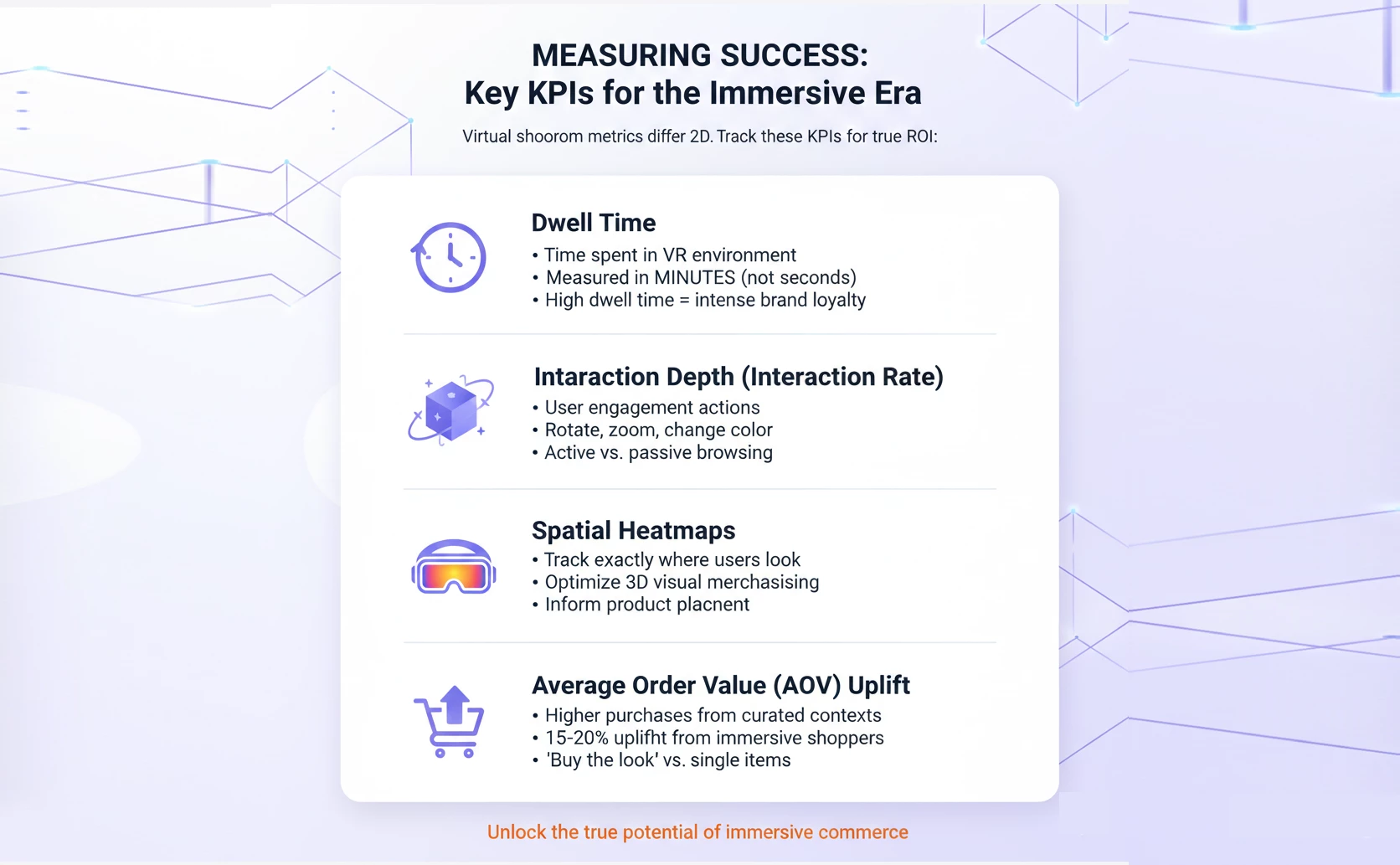
If you try to measure a virtual showroom using the same metrics as a 2D blog post, you will fail to see the true ROI. “Page Views” and “Bounce Rate” don’t tell the whole story in a spatial environment. In the world of immersive commerce, data is vastly richer. Here are the KPIs you must track:
- Dwell Time: How long is a user spending inside the virtual environment? Traditional e-commerce sessions are measured in seconds; immersive sessions are often measured in minutes. High dwell time is directly correlated with intense brand loyalty.
- Interaction Depth (Interaction Rate): Did the user simply look around, or did they actively engage? Track how many times a user rotated an item, zoomed in on a texture, or changed a product’s colorway.
- Spatial Heatmaps: Advanced VR analytics can track exactly where users are looking. Are they ignoring the products on the virtual bottom shelf? This data allows you to optimize your 3D visual merchandising in real-time.
- Average Order Value (AOV) Uplift: Because virtual showrooms allow retailers to display products in heavily curated, lifestyle contexts (e.g., a fully furnished virtual living room rather than a single chair on a white background), users are far more likely to buy “the look.” Retailers consistently report a 15% to 20% uplift in AOV from immersive shoppers.
Future VR Trends: Haptics, AI Concierges and Sensory Retail
While 2026 has brought incredible advancements, the innovation curve is only accelerating. To maintain a competitive edge, forward-thinking brands must keep an eye on the immediate horizon.
Generative AI and Dynamic Storefronts
The integration of Generative AI is transforming virtual showrooms from static 3D spaces into highly dynamic environments. Imagine a customer logging into your WebVR store. Based on their past purchase history and real-time browsing behavior, an AI engine instantly reconfigures the virtual store layout, placing their most likely purchases front and center, styled in their preferred aesthetic.
The AI Shopping Concierge
We are moving beyond text-based chatbots. The next evolution is the spatial AI concierge—a photorealistic, voice-activated avatar that walks the virtual store with the customer. This AI can answer complex questions (“Do you have this jacket in a waterproof material?”), suggest complementary accessories, and guide the user through the checkout process entirely through natural language voice commands.
Haptic Feedback: Sensory Retail
The final frontier of VR retail is touch. Advancements in consumer-grade haptic technology—such as lightweight haptic gloves or localized ultrasonic haptic feedback from mobile devices—will soon allow customers to “feel” the digital products. They will be able to distinguish the texture of a knitted sweater from a smooth leather boot entirely through digital feedback, completely closing the sensory gap between physical and digital shopping.
Conclusion: The Bold Future is Orange
The shift toward VR retail is not a passing trend. it is a fundamental, structural evolution in how humans discover, evaluate, and exchange value. Retailers who embrace the ROI of immersion are not merely selling products—they are selling confidence, absolute convenience, and a vibrant brand story.
The question is no longer whether your brand can afford to invest in spatial computing and 3D asset generation. The real question is whether you can afford to sit on the sidelines while your competitors build infinite, global storefronts that never close and never run out of floor space.
At Atlyx, we specialize in cutting through the noise and turning bold, “future” concepts into measurable, bright-orange revenue today. Stop letting your products sit flat on a screen.

Deep-Dive FAQ: VR in Retail
Is VR retail only feasible for massive luxury brands with unlimited budgets?
Absolutely not. While legacy luxury houses pioneered the space, the democratization of WebVR and API-driven 3D platforms means mid-market retailers can now launch high-quality virtual showrooms. For many SME owners, it is actually cheaper to launch a virtual storefront than to open a physical boutique.
How much does it realistically cost to implement a virtual showroom in 2026?
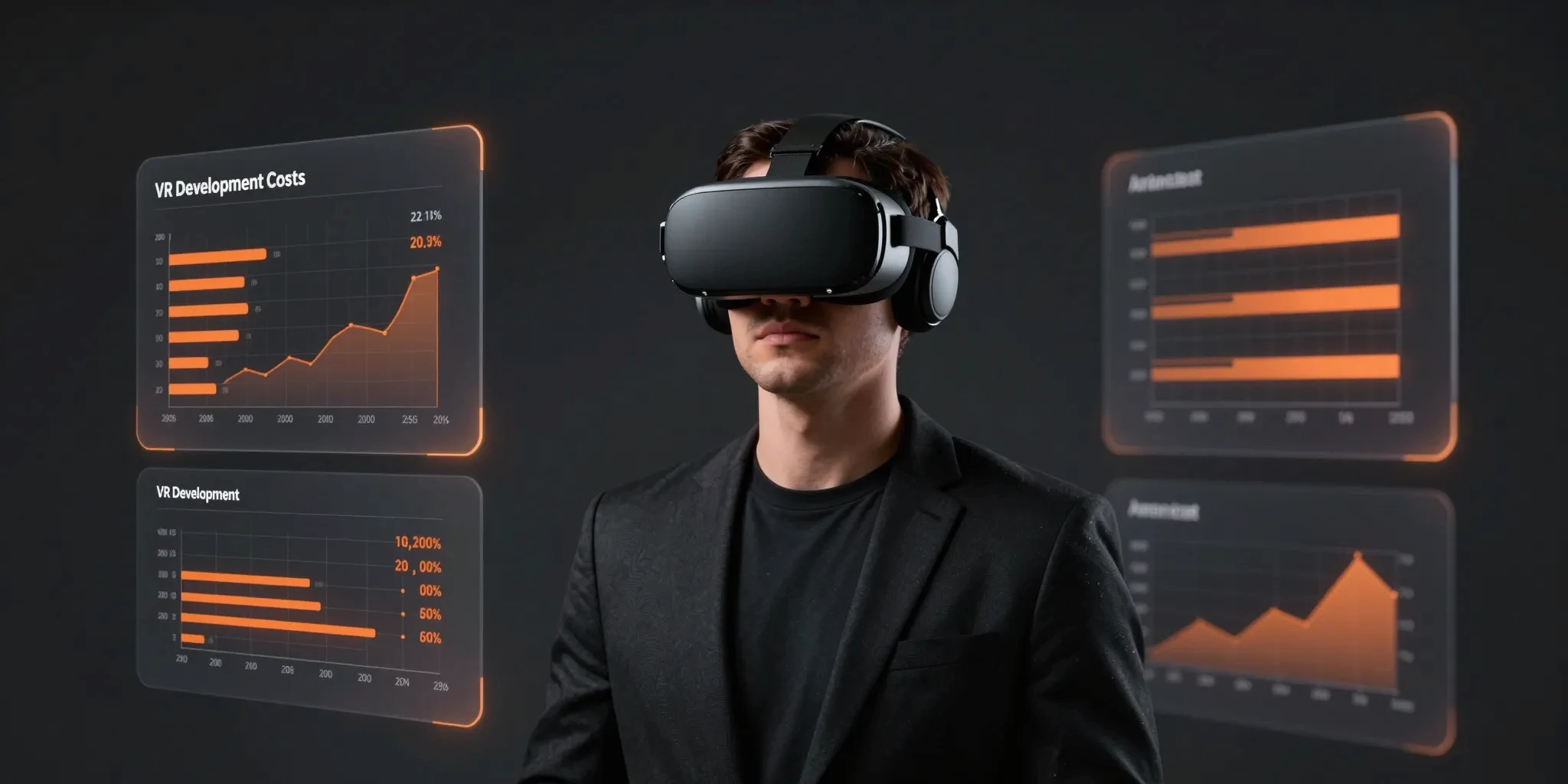
VR development costs scale with fidelity and integration depth. A templated WebVR showroom using existing 3D assets can be launched for under $15,000. Fully bespoke, headless enterprise VR solutions with real-time ERP integration can range from $50,000 to $150,000+. However, the immediate drop in return rates typically pays for the technology within the first fiscal year.
Do customers really want to wear a headset to shop for clothes?
This is a common misconception. The vast majority of VR retail today is “Headset-Optional.” Web-based VR allows customers to explore fully interactive 3D product visualizations using the touch screen of their smartphone or the mouse on their laptop. Headsets (like the Quest 3) are usually reserved for high-intent “power users” looking for a VIP experience.
How does VR technology actually improve retail sustainability?
The fashion and furniture industries are massive polluters, largely due to reverse logistics (the shipping, processing, and often destruction of returned items). By utilizing Virtual Try-On software and AR Commerce to ensure a perfect fit the first time, brands drastically cut down on their return shipping carbon footprint. Furthermore, 3D sampling eliminates the need to manufacture and ship physical prototypes across the globe during the design phase.
What is the best way to get started with 3D product visualization?
The best immersive experience partner for brands combines strategic clarity, technical depth, creative storytelling, and measurable KPIs. They approach immersive agency selection with structured methodology rather than experimental thinking. Beyond execution, they focus on scalability, transparency, and long-term optimization. A true immersive experience partner transforms immersive technology into sustained competitive advantage.”
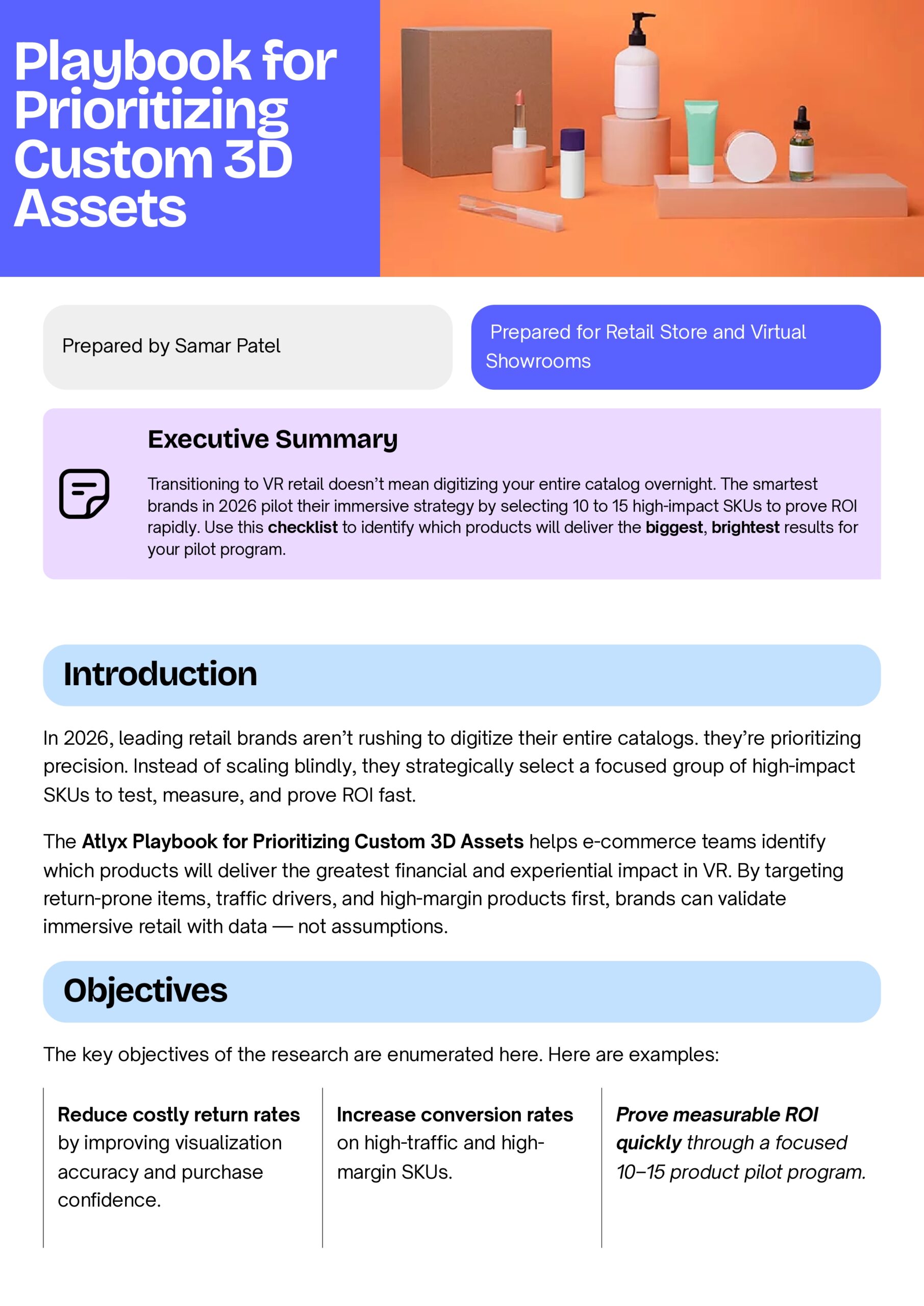
Bonus : Atlyx Playbook for Prioritizing Custom 3D Assets
Click Here to Access the complete playbook