Luxury VR Brand Storytelling sector has always been defined by one core principle: experience is everything. From couture fashion houses to ultra-premium hospitality, the world’s most admired brands have built their reputations not only on exceptional products but on the emotions, narratives, and sensory worlds that surround them.
Now, Virtual Reality (VR) is reshaping the frontier of what a brand experience can be. It’s no longer a novelty—it’s an immersive stage where heritage, craftsmanship, and innovation converge to create unforgettable moments. For luxury brands, Luxury VR Brand Storytelling unlocks the ability to tell stories with unprecedented depth, intimacy, and narrative control.
But not every VR production becomes a masterpiece. Luxury requires precision, curation, and intent. That’s why integrating VR into luxury storytelling isn’t about chasing technology; it’s about following a structured innovation process that ensures the experience is meaningful, on-brand, and commercially valuable.
This article outlines a six-step innovation process designed specifically for luxury brands seeking to create high-impact VR experiences that resonate with discerning audiences.
Why VR Matters for Luxury VR Brand Storytelling

- It invites customers into the brand’s world—not just visually, but spatially.
- It gives unprecedented access to the stories behind craftsmanship and heritage.
- It transforms passive viewers into active participants.
- It redefines exclusivity through private, invite-only digital spaces.
Whether it’s a virtual atelier, a behind-the-scenes look at product creation, an immersive runway journey, or a VR-driven boutique experience, the medium unlocks a level of depth unmatched by traditional storytelling. However, without a disciplined framework, brands risk producing something superficial or disconnected. The following six-step innovation process ensures Luxury VR Brand Storytelling serves the brand narrative not the other way around.
Step 1 — Narrative Discovery & Brand Essence Mapping
Purpose
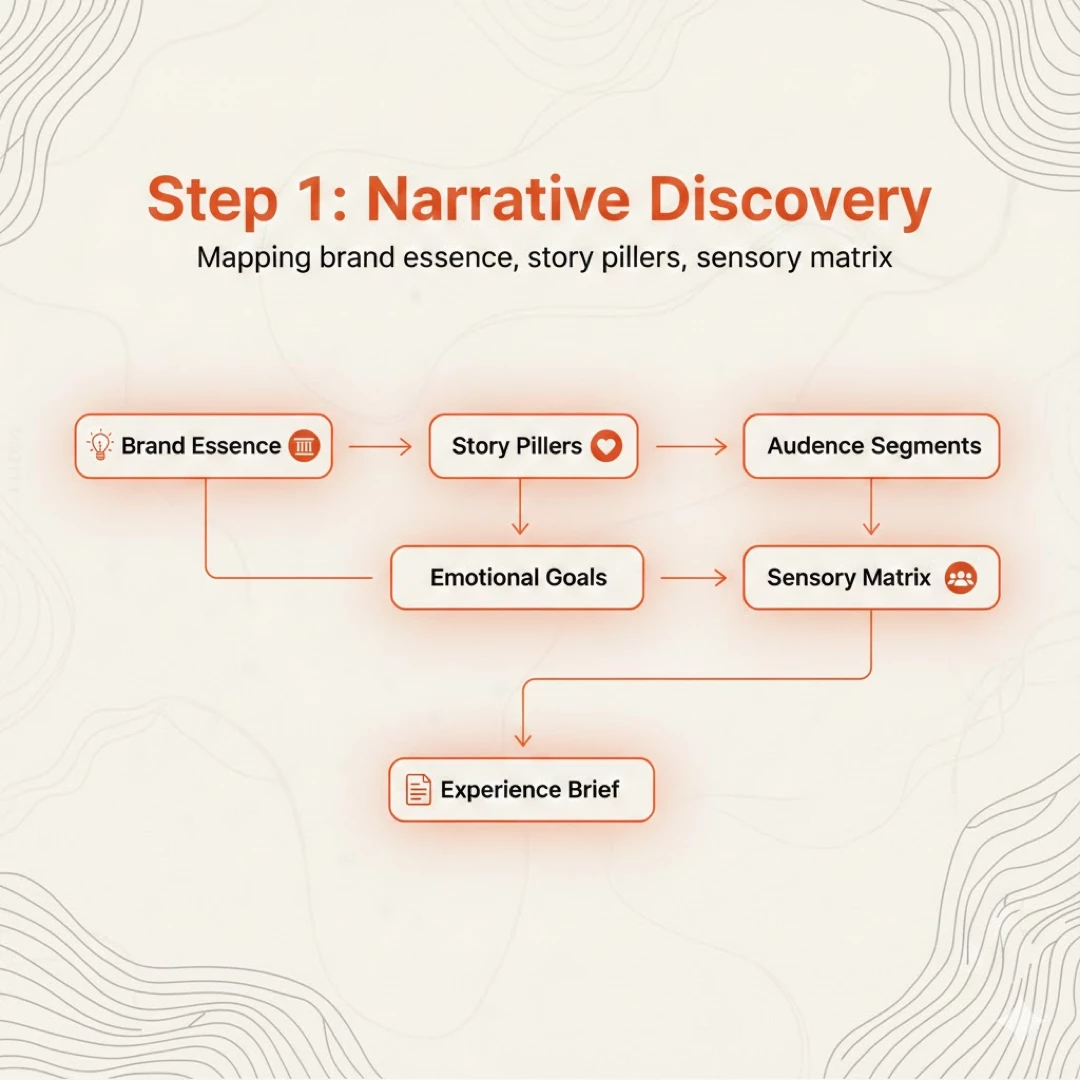
Establish an unambiguous, emotionally-driven foundation for the VR experience so every creative and technical decision remains true to the brand. This step turns brand DNA into a usable brief: a set of story pillars, emotional goals, sensory references, and audience truths that will guide concepting, prototyping, and production.
What Success Looks Like (Deliverables)
- A concise Brand Essence Statement (1–2 sentences) that captures the emotional core the digital brand experience should convey.
- 3–5 Story Pillars (e.g., Craftsmanship, Legacy, Modern Luxury) with short descriptions and evidence.
- An Emotional Goal (primary feeling + 2 supporting feelings).
- A Sensory Reference Matrix describing visual, auditory, tactile, and motion cues.
- A prioritized list of Audience Segments with behavioral insights and expectations.
- A one-page Experience Brief that translates the above into VR-specific imperatives (what must be experienced, avoided, and measured).
- A short list of Red Lines (brand things you must not do) and Must-Have Moments (moments of ritual, reveal, or intimacy).
Who to Involve
- Executive Sponsor (brand custodian) — approves the direction.
- Head of Brand/Creative Director — translates brand language to aesthetics.
- Product/Experience Lead — links goals to capability.
- Customer Insights/CRM — supplies audience data.
- Retail or Clienteling Lead — aligns with commercial touchpoints.
- Technical Lead (engineer/VR specialist) — flags feasibility constraints early.
- External Creative Strategist or Agency Facilitator (optional) — for neutral synthesis and creative facilitation.
Activities & How to Run Them (Practical Sequence)
- Pre-work: Collect Artifacts — Ask participants to compile core materials: brand guidelines, campaigns, product stories, customer testimonials, flagship store imagery, archival or craft documentation, customer journey maps, and high-value customer profiles.
- Stakeholder Interviews — Conduct short, focused interviews probing origins, myths, and non-negotiables. Capture authentic language for narrative hooks.
- Brand Embodiment Workshop (Synthesis Session) — Extract emotional pillars and sensory cues through exercises:
- Origin Story Mining — surface founding myths, artisanal processes, signature rituals.
- Emotional Mapping — for each brand attribute, ask “what should the customer feel?” Map responses on a warmth ↔ prestige and intimate ↔ theatrical axis.
- Sensory Collage — collect images, sounds, textures, and words representing the brand’s spatial and material language.
- Audience Immersion — Use CRM data, quotes, or short videos to map emotional expectations per audience segment.
- Synthesize to Outputs — Translate findings into the deliverables above. Create the one-page Experience Brief as the canonical reference.
Checklist Before Moving to Step 2
- Is there a one-sentence Brand Essence everyone agrees on?
- Do the Story Pillars have supporting proof points?
- Is the Emotional Goal specific and actionable?
- Has the Sensory Matrix been reviewed by creative and technical leads?
- Is there an Experience Brief that states what success looks like for the VR moment?
- Do we have at least 1–2 named audience segments and supporting CRM/customer evidence?
Step 2 — Immersive Concept Ideation & VR Experience Design
Purpose
The purpose of this step is to transform the brand’s narrative into tangible immersive VR experience by developing immersive concepts that balance storytelling, aesthetics, and technical feasibility. This step ensures that every interaction, environment, and moment resonates with the brand’s essence and engages the audience on an emotional and sensory level.
What Success Looks Like (Deliverables)
- Multiple VR Concept Prototypes (2–3 variations) that align with the brand story and emotional goals.
- Annotated Storyboards & Journey Maps detailing key VR moments and user interactions.
- A defined Interaction Framework specifying user actions, feedback, and navigation within the VR environment.
- Preliminary Art & Sensory Direction including color palettes, textures, soundscapes, and lighting concepts.
- Feasibility assessment highlighting technical constraints, hardware requirements, and integration points.
Who to Involve
- Creative Director / Experience Lead — ensures alignment with brand vision.
- VR Designer / 3D Artist — translates concepts into immersive visuals.
- Interaction Designer — defines intuitive user interactions and flow.
- Sound Designer / Composer — crafts spatial audio and ambiance.
- Technical Lead / VR Developer — evaluates feasibility and performance.
- Project Manager — coordinates iterations and stakeholder feedback.
- Optional: External Concepting Agency — brings fresh creative perspectives.
Activities & How to Run Them (Practical Sequence)
- Ideation Workshops — Generate multiple VR concepts using guided exercises, sketching, and rapid prototyping. Encourage divergent thinking while keeping brand essence central.
- Storyboard Development — Map out the VR journey frame by frame. Highlight key interactions, emotional peaks, and moments of ritual or reveal.
- Interaction Mapping — Define user pathways, input methods, feedback mechanisms, and immersive touchpoints that reinforce the story.
- Visual & Sensory Mockups — Create preliminary 3D renders, material samples, sound clips, and lighting studies to guide the look-and-feel.
- Feasibility Check — Collaborate with technical leads to ensure the concepts are achievable within hardware and timeline constraints.
- Concept Review & Selection — Evaluate concepts against brand story pillars, emotional goals, and technical feasibility. Select 1–2 primary concepts for prototyping.
Concrete Artefacts & Templates You Can Use Immediately
- VR Concept Boards — visuals, mood references, and key interactions.
- Storyboard Templates — preformatted frames for scene planning.
- Interaction Flow Diagrams — define paths, triggers, and responses.
- Sensory Mockup Sheets — document textures, colors, lighting, and soundscapes for the VR environment.
Checklist Before Moving to Step 3
- Are the concepts fully aligned with Brand Story Pillars and emotional goals?
- Have storyboards and journey maps been reviewed and validated?
- Is the interaction framework intuitive and immersive?
- Do the visual and sensory mockups convey the desired brand experience?
- Are technical feasibility constraints clearly documented and addressed?
Step 3 — VR Prototyping & Iteration
Purpose
Turn the selected VR concept prototypes into interactive prototypes to validate storytelling, interactions, and sensory engagement. Iterative testing ensures that the experience is immersive, intuitive, and aligned with the brand essence before full-scale production.
What Success Looks Like (Deliverables)
- Low-to-mid fidelity VR prototypes demonstrating key scenes, interactions, and emotional beats.
- User-tested experience flows with documented feedback and insights.
- Refined interaction models addressing usability and immersion.
- Updated art & sensory references based on prototype testing.
- Clear list of technical requirements and optimizations for production.
Who to Involve
- VR Designer / 3D Artist — builds prototype assets and environments.
- Interaction Designer — validates user paths and feedback mechanisms.
- Technical Lead / VR Developer — ensures performance, hardware compatibility, and optimization.
- Sound Designer — tests audio cues and spatial sound integration.
- QA / User Testing Team — provides feedback from sample audience interactions.
- Creative Director — ensures alignment with brand vision and emotional goals.
Activities & How to Run Them (Practical Sequence)
- Build Prototype Scenes — Create low-to-mid fidelity versions of key VR moments to test visual, spatial, and interactive elements.
- Conduct User Testing — Invite internal stakeholders or select audience segments to interact with prototypes. Observe engagement, emotions, and behavior.
- Gather Feedback & Insights — Document user reactions, pain points, and suggestions. Identify which moments deliver emotional impact and which require refinement.
- Iterate — Adjust assets, interactions, pacing, and sensory elements based on feedback. Repeat testing cycles until the experience meets brand and audience objectives.
- Refine Technical Specs — Define performance requirements, optimize 3D assets, and ensure compatibility across VR hardware platforms.
- Validate Experience Alignment — Ensure that every prototype iteration remains true to Brand Essence and Story Pillars.
Concrete Artefacts & Templates You Can Use Immediately
- VR Prototype Files — low-to-mid fidelity assets for interactive testing.
- User Testing Forms — standardized templates to capture qualitative and quantitative feedback.
- Iteration Log — track changes, decisions, and rationale for future reference.
- Updated Sensory Reference Sheets — incorporate findings from prototype testing.
Checklist Before Moving to Step 4
- Do the VR prototypes clearly convey the key brand story and emotional goals?
- Have user feedback and observations been systematically documented?
- Are the interaction models intuitive and immersive?
- Have technical optimizations been validated for production readiness?
- Is the prototype aligned with Brand Essence and Story Pillars?
Step 4 — Production & Immersive Build
Purpose
Bring the validated VR prototypes to life by building fully immersive, high-fidelity experiences. This stage combines creative, technical, and sensory elements to create a polished VR world that reflects the brand’s essence and delivers a seamless, emotionally engaging journey for users.
What Success Looks Like (Deliverables)
- The success of this stage is marked by high-fidelity VR environments and elements that define compelling Luxury VR Brand Storytelling
- Polished interactive elements and user pathways tested for smooth navigation and engagement.
- Integrated soundscapes, animations, and motion cues enhancing immersion.
- Optimized performance metrics for the chosen VR hardware.
- Documentation of technical and creative specifications for maintenance and future updates.
Who to Involve
- 3D Artists / VR Designers — finalize environments, assets, and visual effects.
- VR Developers / Technical Lead — integrate interactions, optimize performance, and ensure cross-platform compatibility.
- Sound Designers / Composers — implement spatial audio and reactive sound elements.
- Animation & Motion Graphics Team — polish animations and motion transitions.
- QA / Testing Team — perform iterative testing for usability, performance, and immersion.
- Creative Director / Experience Lead — maintain brand alignment and emotional integrity.
Activities & How to Run Them (Practical Sequence)
- Asset Production — Create all 3D models, textures, lighting, animations, and audio required for the full VR environment.
- Integration & Development — Assemble assets, implement user interactions, and optimize performance in the VR engine.
- Immersive Audio & Visual Tuning — Adjust soundscapes, lighting, shaders, and motion cues to achieve full immersion and emotional resonance.
- Internal QA & Iteration — Test the build for usability, performance, and alignment with brand essence; make necessary adjustments.
- Final Production Review — Conduct a comprehensive walkthrough with stakeholders to approve the immersive build.
- Hardware & Deployment Preparation — Ensure the VR experience is fully compatible with target hardware, headsets, and deployment environments.
Concrete Artefacts & Templates You Can Use Immediately
- High-fidelity VR Environment Files — ready for user deployment.
- Interaction & Motion Documentation — detailed specifications for animations and feedback cues.
- Spatial Audio Maps — guide for immersive sound implementation.
- Technical Specs Sheet — performance, hardware requirements, and integration notes.
Checklist Before Moving to Step 5
- Are all VR environments fully immersive and polished?
- Have interactive elements been tested and refined for usability?
- Is the audio-visual experience aligned with brand story and emotional goals?
- Have performance metrics been optimized for target VR hardware?
- Are all technical and creative specifications documented for future reference?
Step 5 — User Testing & Experience Refinement
Purpose
Validate the VR experience with real users to ensure it delivers the intended emotional impact, brand story alignment, and intuitive interactions. Refining the experience based on feedback maximizes engagement, immersion, and satisfaction for the luxury audience.
What Success Looks Like (Deliverables)
- Documented user feedback highlighting successes, pain points, and emotional reactions.
- Updated interaction flows and user pathways incorporating feedback.
- Refined visual, audio, and sensory elements to enhance immersion.
- Comprehensive test reports with actionable recommendations for final production.
- Validated brand story alignment across all VR touchpoints.
Who to Involve
- QA / User Testing Team — conducts structured testing sessions and records feedback.
- UX / Interaction Designer — refines flows and interactions based on results.
- VR Designer / 3D Artist — adjusts visuals, lighting, and assets as needed.
- Sound Designer — tweaks spatial audio and cues for enhanced immersion.
- Creative Director / Experience Lead — ensures refinements remain true to brand essence.
- Optional: Selected high-value customers or VIP users — provide real-world insights from the target luxury audience.
Activities & How to Run Them (Practical Sequence)
- Plan Testing Sessions — Define objectives, audience segments, tasks, and success metrics for VR interaction.
- Conduct User Testing — Invite users to engage with the VR experience while observing behavior, recording reactions, and capturing qualitative insights.
- Analyze Feedback — Identify patterns in emotional responses, usability issues, and immersion challenges.
- Refine VR Experience — Adjust interaction flows, visual elements, audio cues, and pacing to address feedback while maintaining brand alignment.
- Iterate & Retest — Run follow-up testing to ensure refinements improve engagement and immersion.
- Finalize Recommendations — Document actionable insights and ensure they are incorporated into final production specifications.
Concrete Artefacts & Templates You Can Use Immediately
- User Testing Scripts & Guides — standardized prompts and tasks for consistent sessions.
- Observation & Feedback Templates — capture qualitative and quantitative responses.
- Refinement Log — track changes, rationale, and impact for iterations.
- Test Report Template — summarize results, recommendations, and next steps for production.
Checklist Before Moving to Step 6
- Have all user insights been documented and analyzed?
- Are the interaction flows intuitive and immersive after refinements?
- Have visual, audio, and sensory elements been optimized based on feedback?
- Is the experience fully aligned with Brand Essence and Story Pillars?
- Are actionable recommendations incorporated into the final production specs?
Step 6 — Launch & Performance Optimization for Luxury VR Brand Storytelling
Purpose
Deploy the VR experience to the target audience while continuously monitoring performance, engagement, and emotional impact. Optimize in real-time to ensure the experience delivers maximum immersion, successfully aligning your Luxury VR Brand Storytelling with the brand’s goals and driving measurable results.
What Success Looks Like (Deliverables)
- Live VR experience deployment across selected hardware and platforms.
- Performance dashboards tracking user engagement, completion rates, and key interactions.
- Ongoing analytics reports capturing emotional engagement, retention, and behavioral patterns.
- Documented optimization recommendations for continuous improvement.
- Post-launch review aligning outcomes with Brand Essence and business objectives.
Who to Involve
- Technical Lead / VR Developer — manages deployment, ensures stability, and monitors performance.
- Analytics & Data Specialist — tracks engagement metrics, behavioral patterns, and KPIs.
- Experience Lead / Creative Director — ensures brand alignment and monitors emotional impact.
- Support Team — provides user assistance and addresses technical issues.
- Optional: Marketing / Client Relations — communicates launch to target audience and collects qualitative feedback.
Activities & How to Run Them (Practical Sequence)
- Launch Preparation — Verify VR hardware, software, and network readiness. Conduct final QA checks.
- Deployment — Release the VR experience to the target audience, whether in-store, private sessions, or online platforms.
- Real-Time Monitoring — Track user behavior, engagement rates, and technical performance during initial sessions.
- Collect Feedback — Gather qualitative input from users to identify friction points or opportunities for enhancement.
- Optimization — Implement improvements based on analytics and user feedback, adjusting interactions, pacing, or visuals as needed.
- Post-Launch Review — Conduct a comprehensive evaluation to measure success against emotional, brand, and business goals.
Concrete Artefacts & Templates You Can Use Immediately
- Deployment Checklist — ensures technical readiness across hardware and platforms.
- Analytics Dashboard Template — tracks engagement, completion rates, and key interactions.
- User Feedback Forms — standardized for qualitative input during live sessions.
- Optimization Log — documents improvements, rationale, and impact for iterative updates.
Checklist After Launch
- Is the VR experience stable and accessible across all intended platforms?
- Are engagement metrics meeting predefined KPIs?
- Have qualitative feedback and observations been documented for optimization?
- Are improvements being implemented and tracked efficiently?
- Does the live experience continue to reflect Brand Essence and Story Pillars?
Conclusion — Elevate Your Luxury VR Brand Storytelling
Integrating Virtual Reality into luxury brand storytelling is more than just adopting new technology it’s about crafting immersive, emotionally resonant experiences that reflect your brand’s essence. Following a structured six-step innovation process ensures every VR moment is intentional, immersive, and aligned with your Brand Strategy, Experience Design, and Digital Innovation goals.
By carefully mapping your narrative, ideating concepts, prototyping, refining, building, testing, and optimizing, luxury brands can deliver VR experiences that are not only visually stunning but also emotionally impactful, memorable, and commercially valuable.
At Atlyx, we specialize in creating immersive brand experiences that transform attention into attachment. If you’re ready to elevate your brand’s storytelling and craft unforgettable VR experiences, connect with our team today and begin your journey into the future of luxury brand engagement.